Source 20mm aluminium wheel shims for VW, Roewe, and Mitsubishi
Compare 30 listings for 20mm aluminium wheel shims from verified suppliers. Buyers can evaluate specifications, pricing, and customization options for Volkswagen, Roewe, and Mitsubishi applications.
Key considerations
Products List






Comprehensive Sourcing Guide
Strategic Sourcing Guide for 20mm Aluminium Wheel Shims
Technical Specifications and Material Integrity
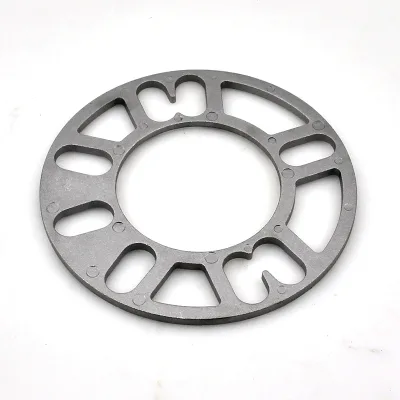
When sourcing 20mm aluminium wheel shims, often categorized in the market as wheel adapters or spacers, the primary focus must be on the material composition and dimensional precision. The supplied product data confirms that Aluminium and Alloy are the standard materials utilized for these components. Specifically, the industry often references Aluminium for its balance of weight reduction and structural strength, which is critical for maintaining vehicle dynamics. Buyers must verify that the specific batch of shims meets the required alloy standards, as the mechanical properties of the metal directly influence the safety margin under load.
The thickness specification is a critical variable in this procurement category. While the core keyword specifies a 20mm shim, the observed product data indicates a thickness range of 25 mm for certain adapter models and 0.65 thickness for other specialized parts. This discrepancy highlights the necessity for buyers to strictly define their required thickness in the Request for Quotation (RFQ). A 20mm shim is not a universal standard across all listings; some suppliers may offer 25 mm variants or thinner components labeled differently. The buyer must ensure the physical dimension matches the vehicle's clearance requirements and the intended offset calculation.
Furthermore, the manufacturing process for these aluminium components often involves specific finishing techniques. The data notes Chrome as a finishing option for certain wheel-related products, though for wheel spacers, the finish is typically anodized or powder-coated to prevent corrosion. The Texture of the product may also vary, with some listings indicating a Linen Finish, which can affect the aesthetic integration with the wheel assembly. The Shape is generally described as Special-Shaped Parts, implying that these are not off-the-shelf generic items but often require specific machining to fit the hub geometry. The Hub Diameter for compatible wheels typically ranges from 16-20 inches, and the Lole (likely referring to the number of bolt holes or a specific bolt pattern dimension) is observed as 5 in some datasets. Buyers must cross-reference these specifications with their vehicle's hub bore and bolt pattern to ensure a perfect fit.
Compliance, Certification, and Regulatory Standards
Navigating the regulatory landscape for automotive wheel components requires rigorous verification of certifications. The product data presents a mix of certifications, including ISO, TUV, VIA, DOT, CE, E-Mark, RoHS, and TSETS. It is crucial for buyers to understand that these certifications are not universally applied to every single SKU listed. For instance, one dataset entry lists ISOCE, E-Mark, and RoHS in the context of a Compressor, while another lists ISO, TUV, VIA, and DOT for wheel-related items.
Buyers must explicitly request proof of certification for the specific Wheel Hub Diameter and Thickness they intend to purchase. The DOT (Department of Transportation) certification is particularly vital for the North American market, ensuring the component meets federal safety standards. Similarly, E-Mark is the standard for European compliance. The presence of TUV and VIA indicates third-party testing and validation, which adds a layer of assurance regarding the structural integrity of the aluminium alloy. However, the data also mentions TSETS Component:Compressor, suggesting that some certification listings may be generic to the supplier's broader portfolio rather than specific to the wheel shim.
The prod_standard is listed as 800750745mm in one context and SUS (Stainless Steel) in another. This inconsistency underscores the risk of relying solely on catalog descriptions. Buyers should verify that the Standard for the 20mm aluminium shim aligns with international automotive standards, such as ISO 9001 for quality management, rather than arbitrary dimensional standards that may apply to packaging or unrelated components. The Condition of the product is noted as New and intended as an Original Replacement, which implies the part should meet the same tolerances as the factory-installed hardware.
Cost Drivers and Pricing Dynamics
The pricing structure for 20mm aluminium wheel shims is influenced by several factors, including material costs, customization levels, and order volume. The observed price range in the market spans from 0.01 to 168 USD. This wide variance is not indicative of a single product but rather reflects the difference between a single unit, a set of four, or a bulk industrial order. The MOQ (Minimum Order Quantity) ranges from 1 to 500, with specific listings showing an MOQ of 2 or 1PCS.
The cost is heavily driven by the Customization availability. The data confirms that Customization is available, which can significantly impact the final price. Customizing the Colour (noted as Customizable), the Texture, or the specific Thickness beyond standard increments requires additional machining time and setup costs. Buyers seeking a standard 20mm shim with a Linen Finish or Chrome plating will likely pay a premium over a raw aluminium version. Additionally, the Packing method affects the cost. Options range from Small Packing to Carton Packing and Pallet loading. Bulk orders shipped on Pallets often benefit from lower per-unit shipping costs, whereas single units in Small Packing incur higher logistics overheads.
The Delivery Time is consistently listed as 15 days or 15 Days across various entries. This lead time is a significant cost driver in the supply chain, as it dictates inventory planning. Buyers must factor in this 15-day window when calculating the total cost of ownership, especially if they are operating on a Just-In-Time (JIT) basis. The Brand of the component, such as RAYS, MITSUBISHI, or HKS, can also influence pricing, though these brands often refer to the vehicle application or the component's origin rather than the shim manufacturer itself. Buyers should be wary of "brand" claims that do not correspond to the actual manufacturer of the aluminium adapter.
Typical Applications and Vehicle Compatibility
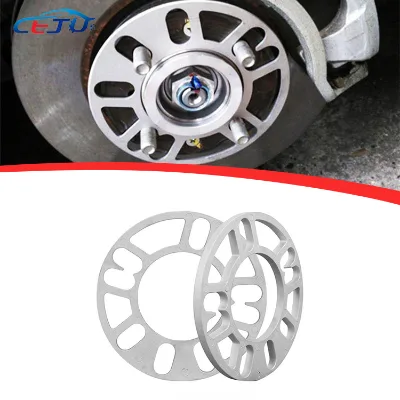
The application of 20mm aluminium wheel shims is diverse, spanning various vehicle makes and models. The product data explicitly lists Volkswagen and Roewe as applications, indicating compatibility with a broad spectrum of passenger vehicles. The Brand field in the data includes MITSUBISHI and HKS, which suggests that these shims are often marketed for performance upgrades or specific model adaptations. The Type is identified as Wheel Hub, and the Product Name is frequently Car Wheel Spacer Adapter or Wheel Adapters.
These components are primarily used to increase the track width of a vehicle, which can improve handling stability and provide clearance for larger brake calipers or wider tires. The Drive Wheel configuration is noted as RWD (Rear Wheel Drive) in some listings, which is a critical detail for buyers sourcing parts for rear axle applications. However, the data also includes Electric Turbocharger Type and Centrifugal or Axialflow ETS types, which are unrelated to wheel spacers and likely represent mixed data entries from a supplier's broader catalog. Buyers must filter these irrelevant attributes to focus on the Wheel Hub Diameter of 16-20 inches and the Diameter of 11-15 Inch for smaller applications.
The Purpose is defined as Original Replacement, meaning these shims are designed to restore or enhance the factory specifications of the vehicle. The Roductname (likely a typo for Product Name) and prod_model entries like adapter, Wheel Adapters, DDY1197, DDY1245, and DDY1148 indicate a wide variety of part numbers. This variety suggests that a 20mm shim is not a single universal part but a family of components with specific bolt patterns and hub bores. Buyers must match the prod_model to their specific vehicle requirements to ensure proper fitment.
Supplier Evaluation and Origin Verification
Evaluating suppliers for 20mm aluminium wheel shims requires a deep dive into their geographic origin and production capabilities. The data indicates that the prod_origin is primarily Ningbo, China, China, and Zhejiang, China. These regions are known for their robust manufacturing ecosystems, particularly in the automotive parts sector. However, the presence of multiple origin locations within the same dataset suggests that buyers should verify the specific factory location to ensure consistency in quality control.
The prod_packing methods, such as Boxes, Smallpacking+Carton Packing+Pallet, and Carton Box, provide insight into the supplier's logistical maturity. A supplier offering Pallet packing for bulk orders is likely more capable of handling large-scale B2B transactions than one offering only Small Packing. The Delivery Time of 15 days is a standard metric for suppliers in these regions, but buyers should confirm if this time includes customs clearance and inland transportation.
When evaluating suppliers, buyers should look for those who can provide detailed documentation regarding the Material (Aluminium/Alloy) and the Finishing process. The data mentions Chrome finishing, but for wheel spacers, anodizing is more common. A reputable supplier should be able to explain the difference and provide the correct specification for the buyer's needs. Additionally, the Customization capability is a key differentiator. Suppliers who can offer Customizable Colour and Texture options demonstrate a higher level of manufacturing flexibility. Buyers should avoid suppliers who cannot clearly distinguish between their core product lines and unrelated items like Compressors or Turbochargers listed in the same catalog.
Quality Control and Long-Term Procurement Strategy
Ensuring the long-term reliability of 20mm aluminium wheel shims requires a robust quality control (QC) strategy. The Condition is listed as New, but this is a baseline requirement. Buyers must implement incoming inspection protocols to verify the Thickness (e.g., 20mm vs. 25mm), the Hub Diameter, and the Lole (bolt pattern). The Standard of SUS (Stainless Steel) mentioned in the data is likely a misclassification for an aluminium product, and buyers should insist on material certificates that confirm the aluminium alloy grade.
The Certification list includes ISO, TUV, VIA, DOT, CE, E-Mark, and RoHS. While these are high-confidence facts, buyers must verify that these certifications apply to the specific prod_model being purchased. For example, RoHS compliance is essential for environmental regulations, while DOT and E-Mark are critical for road legality. The prod_standard of 800750745mm appears to be a packaging dimension rather than a product standard, and buyers should seek out the actual engineering standards (e.g., ISO 9001) that govern the manufacturing process.
For long-term procurement, buyers should establish a relationship with suppliers who offer consistent Delivery Time and reliable MOQ terms. The MOQ of 1 to 500 offers flexibility, but buyers should negotiate volume discounts for orders exceeding the lower threshold. The Packing method should be standardized to prevent damage during transit, with Carton Packing and Pallet loading being the preferred options for bulk shipments. Finally, buyers should monitor the Brand associations, such as RAYS or HKS, to ensure they are not purchasing counterfeit goods. The goal is to secure a supply chain that delivers genuine, high-quality aluminium wheel shims that meet all technical and regulatory requirements for the intended vehicle applications.
FAQs
What materials are used for 20mm aluminium wheel shims?
These shims are primarily manufactured using Aluminium or Alloy materials to ensure structural strength. Buyers must verify specific alloy grades as mechanical properties directly influence safety margins under load.
Which certifications apply to 20mm aluminium wheel shims?
Common certifications include ISO, TUV, VIA, DOT, CE, E-Mark, and RoHS. Buyers should explicitly request proof that these certifications apply to the specific wheel hub diameter and thickness they intend to purchase.
How long is the delivery time for 20mm aluminium wheel shims?
The standard delivery time is typically 15 days from order confirmation. Buyers must factor this lead time into their inventory planning, especially if operating on a Just-In-Time basis.
Can 20mm aluminium wheel shims be customized for specific needs?
Yes, customization is available for color, texture, and specific thickness beyond standard increments. This customization requires additional machining time and setup costs compared to standard raw aluminium versions.
What is the minimum order quantity for 20mm aluminium wheel shims?
The minimum order quantity ranges from 1 piece to 500 units depending on the supplier. Specific listings show MOQs as low as 1 or 2 pieces for smaller orders.
Where are 20mm aluminium wheel shims typically manufactured?
These components are primarily sourced from Ningbo, China, and Zhejiang, China. Buyers should verify the specific factory location to ensure consistency in quality control across batches.
What vehicle applications are compatible with 20mm aluminium wheel shims?
These shims are compatible with various makes including Volkswagen and Roewe. They are designed to increase track width and provide clearance for larger brake calipers or wider tires.